
Catalog
Solutions
Concrete Applied AI applications, ready for adaptation within a manufacturing company's environment. Organized by solution type, each adaptable to a specific department.
Approach
AI added in layers that create value
These applications build on a company's existing foundation rather than replacing it. The code rests on deterministic rules, documentation and the plant's empirical knowledge. AI enters only where it creates real added value.
Deterministic foundation
Business rules, technical documentation, catalogs and the plant's empirical knowledge. The result is repeatable and verifiable — not left to the model's guesswork.
AI in the value layer
The model is used only where it creates real value: interpreting language, recognizing patterns, synthesizing knowledge scattered between people and files.
The company's second brain
Each application learns the specifics of a given department and plant. An AI second brain that knows the context, cites its source and escalates to a person when a matter requires judgment.
The solutions below grow from a single foundation — a structured repository of company knowledge, assigned to departments and managed by an AI layer. Each application provides specialized access to that knowledge within a specific area of work.
01
Domain knowledge
Applications that make a company's knowledge — documentation, project history and team experience — available in natural language, at the point where it is needed. They answer questions, cite their source, and hand the matter to a person when it requires judgment.
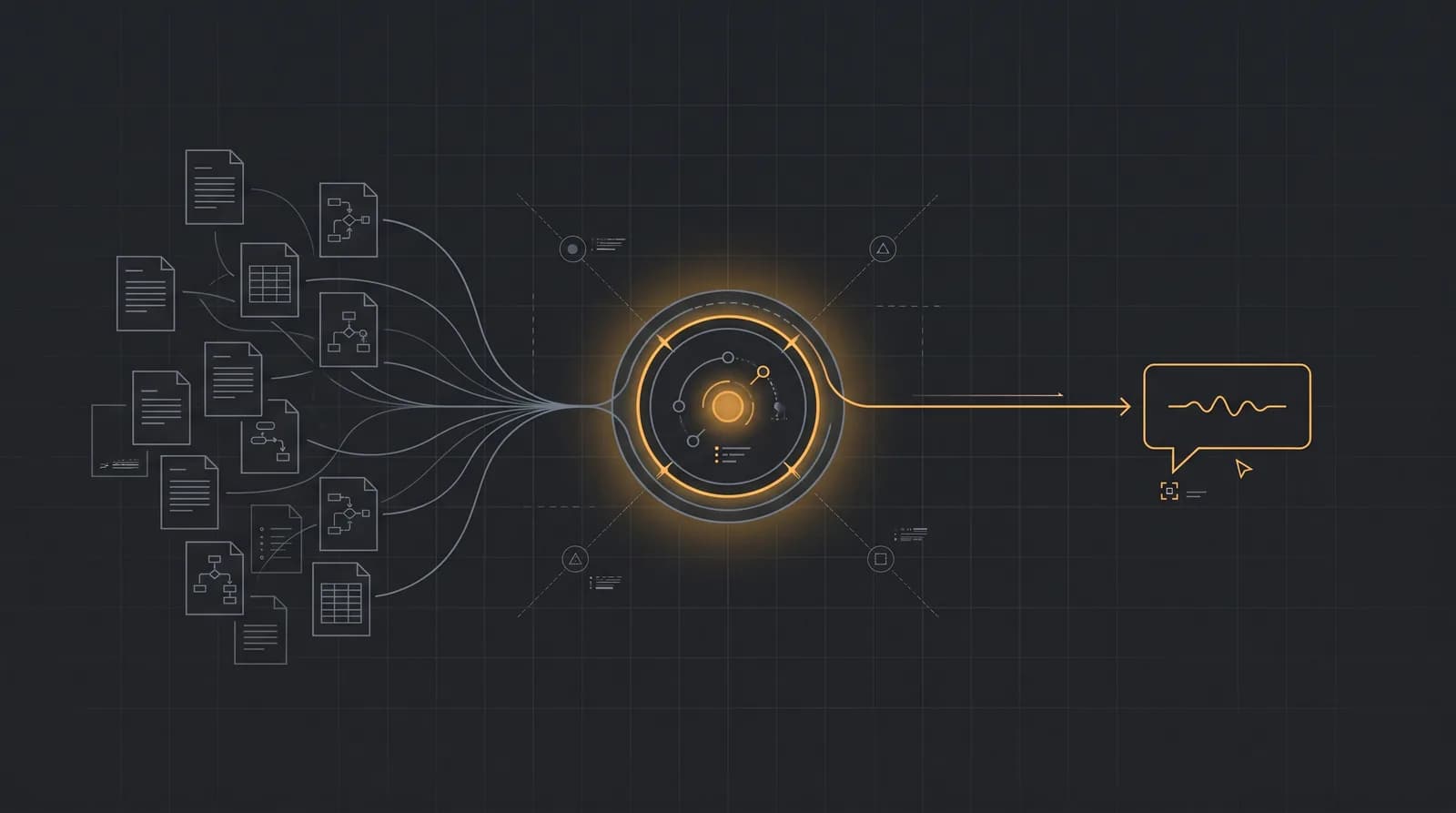
Plant documentation assistant
Technical knowledge stays scattered across network folders, correspondence and process cards. Finding the correct, current version requires searching through resources or consulting someone familiar with their layout. If that person is unavailable, the matter waits.
The question is phrased in natural language. The application searches the indexed documentation, answers, and cites its source — the document and its version. Indexing does not require the files to be organized beforehand.
The time to find information drops from ten-odd minutes to tens of seconds. Access to knowledge stops depending on one person's presence.
Shop-floor assistant
Operators and process engineers make decisions at the machine, with their hands occupied and wearing personal protective equipment. Reaching for documentation means stopping work, and for an unusual start-up it often means waiting for a more experienced colleague.
A voice assistant answers process questions directly at the workstation, drawing on the plant's documentation and start-up history. Decisions that require a process engineer's judgment remain with the person.
Start-ups run more smoothly, with fewer stoppages caused by searching for information. Routine questions no longer require a specific specialist at the machine.
Knowledge transfer assistant
Knowledge of how work is actually done stays in the experience of a few people. An employee leaving, being absent, or changing role is a real risk, and onboarding new staff and handling unusual orders rely on experienced staff's memory and materials prepared ad hoc.
The application draws on precedent from the history of start-ups and orders when no ready process card exists, and prepares onboarding materials for a specific role based on the plant's documentation.
New employees reach independence faster, and undocumented knowledge stops leaving with departing staff.
Service assistant
The service department repeatedly answers the same questions about start-up, error messages or part replacement, each time pulling a technician away from an ongoing repair. For an actual fault, the customer describes the symptoms in their own words, and identifying the cause requires time-consuming analysis.
First-line support answers recurring questions based on product documentation and ticket history. Given a fault description, it maps the symptoms to likely causes and proven fixes from the service archive and suggests next steps. Complex cases are handed to a member of staff along with the full context.
The share of cases resolved on first contact rises, technicians regain time for actual repairs, and diagnostic knowledge from earlier tickets stays within the company.
02
Sales and marketing
Tools for long-cycle technical B2B sales, where methodology, multiple decision-makers and distribution-channel building all matter. Off-the-shelf platforms handle short, transactional prospecting; these applications are embedded in the company's own sales process and fed by knowledge of its product, not an external contact database.
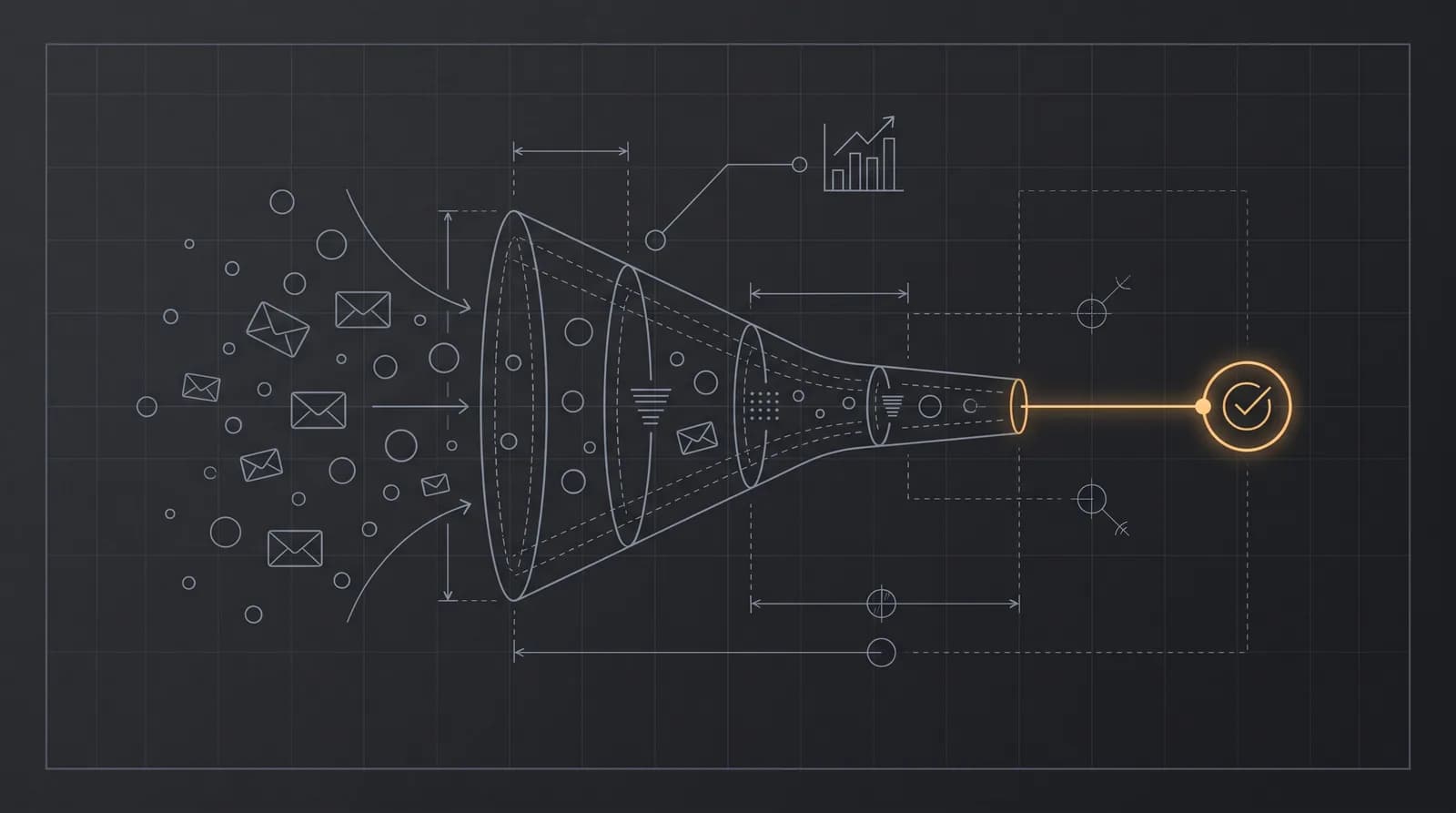
Sales process assistant
In sales with a cycle measured in months, the outcome is decided by process discipline: up-to-date knowledge of each opportunity's stage, identification of the decision-makers on the client side, and clarity on the conditions for moving to the next step. This information usually stays in a salesperson's notes and memory, so the process only works to the extent one person remembers it. Standard CRM systems organize data but do not enforce a sales methodology.
The application guides each sales opportunity according to the company's adopted methodology, flagging gaps at a given stage — unanswered questions, unidentified decision-making roles, unconfirmed purchase criteria. It recommends the next step with a rationale, based on the history of similar opportunities and product knowledge.
The methodology stops depending on one salesperson's discipline and works as a repeatable team process. Fewer opportunities are lost to a skipped stage, and new hires sell according to a proven pattern from their first day.
Preparing for a meeting in complex sales requires understanding the client's entire decision-making structure — decision-makers, influencers, their criteria and the market situation. This information stays scattered across correspondence, notes, order history and public sources, and pulling it together takes time that is rarely available right before the meeting.
The application prepares an account profile embedded in the methodology: it identifies decision-making roles, sets internal collaboration history alongside public information about the client and its market, and points to talking points for the conversation. It draws on the company's own knowledge of its product and client, not an external firmographic database.
The salesperson enters the conversation with a full picture of the decision-making structure. Preparation that once took half a day is reduced to a ready-made brief, without involving an external research agency.
Distribution channel support
Building and running a distributor network means maintaining many partners with varying levels of product knowledge and engagement. Each of them needs materials, technical answers and quoting support, and preparing these for many partners at once exceeds a single team's capacity. How well the product is represented across the channel ends up uneven.
The application gives partners access to product knowledge and quoting support from the company's own repository — technical answers, sales materials, pricing support — in the manufacturer's terminology and standard. It shortens onboarding time for new partners and keeps the message consistent across the whole channel.
The distributor represents the product at the manufacturer's own level. Channel growth accelerates, and supporting it no longer requires preparing materials for each partner individually.
03
Estimating and quoting
Applications that turn a client's technical documentation into a quote. They rest on the deterministic foundation of the plant's catalogs and rates, and shorten the estimating process from days to hours.
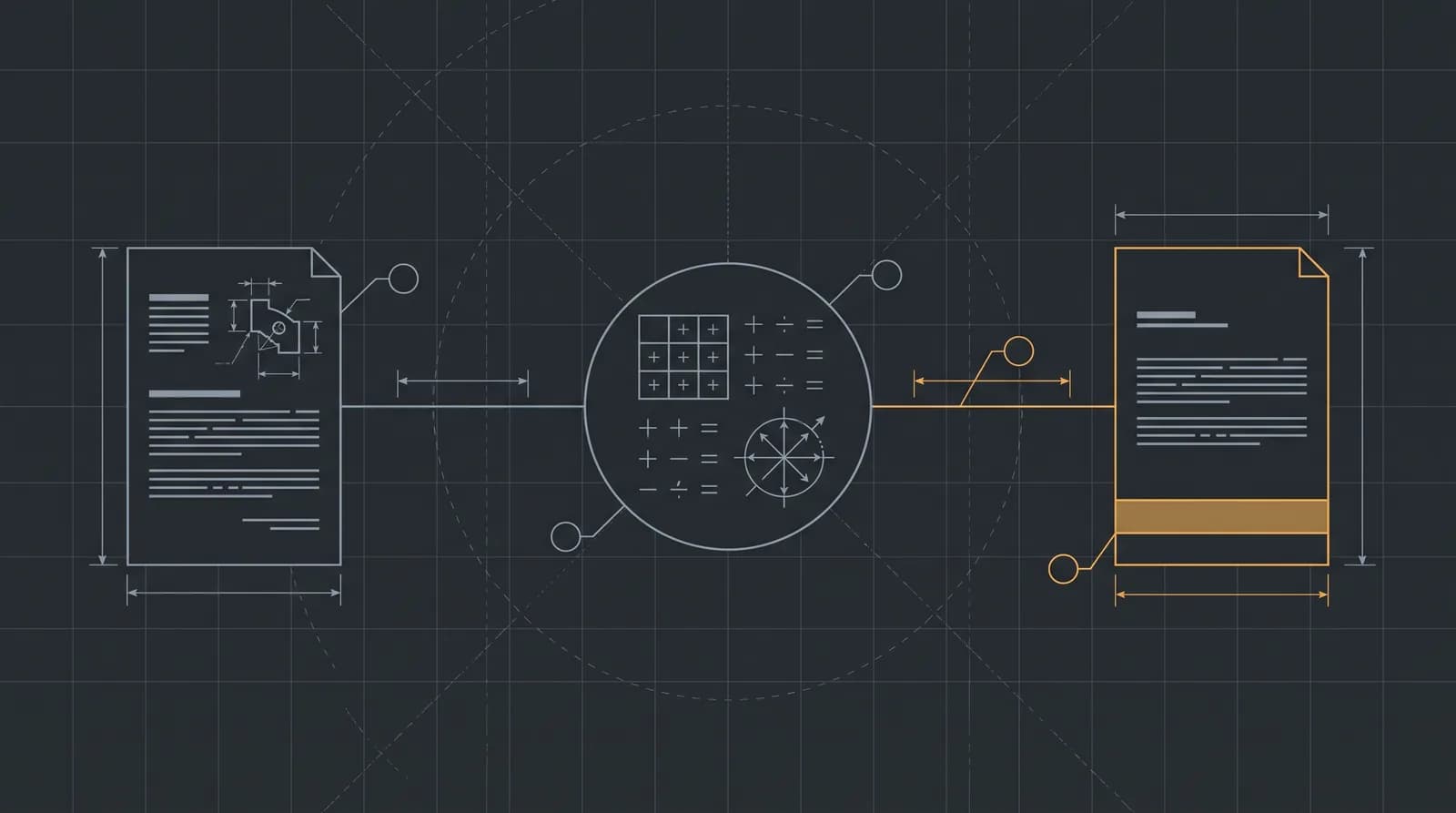
Estimating from technical documentation
Quoting a non-standard order takes several days. It requires manually reading drawings and specifications, preparing a bill of materials, calculating cost and drafting the offer. The extended response time causes some inquiries to be lost.
The application reads technical documentation — drawings, PDF files, specifications — extracts parameters, matches items to the plant's catalog and prepares a cost estimate according to its rates and rules. The result is a ready draft quote for approval.
Estimating time shortens from days to hours. The department handles more inquiries without growing the team.
Manufacturing feasibility assessment
Price and lead time reach the client before it has been verified that the part can be made without complications. Risks only surface at the design or production stage, where fixing them is most costly.
The application analyzes design documentation, flags manufacturing risks and proposes alternative solutions before the design department gets involved. The scope of the assessment is matched to the plant's technology.
Costly complications at the production stage become less frequent, and the quote-to-order loop for make-to-order production shortens.
Plant estimating standard
Pricing rules — markups, rates, material assumptions — stay in spreadsheets and in a few people's knowledge. Different employees apply different approaches, and the archive of past quotes goes unused. One specialist's absence can bring quoting to a halt.
The application consolidates the calculation rules in one place and searches the quote archive for similar orders, making earlier calculations available as a reference point.
Quotes become more consistent, dependence on individual people decreases, and onboarding a new employee into estimating tasks goes faster.
04
Analysis and patterns
Applications that spot, across a set of individual cases, relationships that no single case reveals on its own. They turn scattered history into a signal before a problem grows significant.
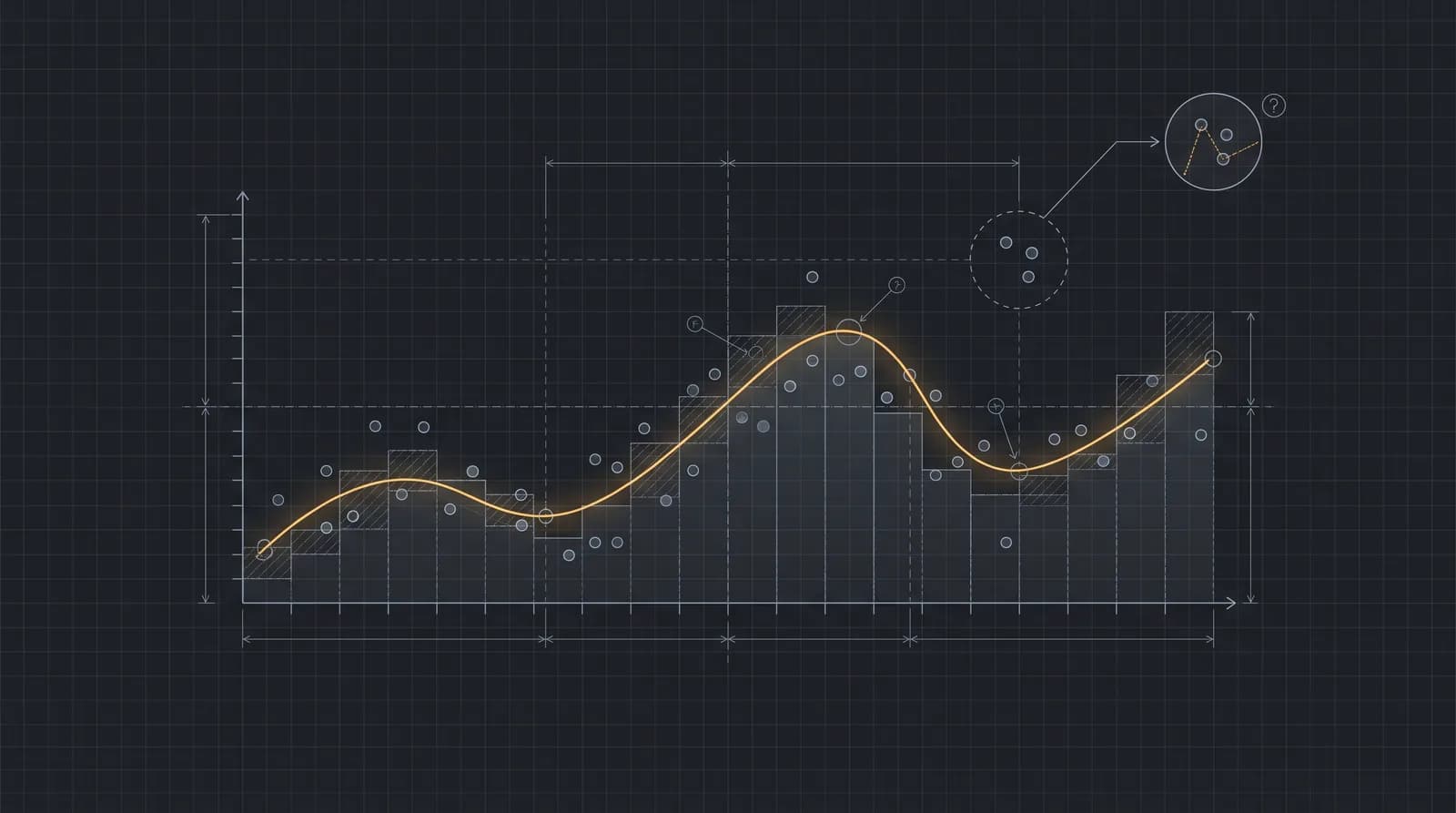
Pattern analysis in ticket history
Complaints, faults and tickets are handled and closed one by one. A recurring pattern — the same component, the same configuration, the same cause — spreads across dozens of separate cases and stays unnoticed until it grows in scale.
The application aggregates the history of tickets, complaints and production, revealing patterns invisible in individual cases. Notice of a recurring problem reaches the quality and design departments early enough, together with references to the specific underlying cases.
Problems are identified at the source before they turn into a series of complaints. Ticket history takes on the role of an early-warning system.
Data on the business's operation stays in separate systems — advertising tools, CRM, ERP, logistics systems. A report is compiled manually from multiple sources, with a delay, and shows the current state but does not flag deviations. A problem only becomes visible once it has reached significant scale.
The application brings together data from multiple systems in a single view and adds a layer of interpretation: it flags values that deviate from the norm — cost exceeding the accepted level, a metric trending downward, a deviation from a pattern. Queries are phrased in natural language.
Manual report preparation is replaced by ongoing visibility and pointers to areas that need attention. The same mechanism serves marketing, logistics and production metrics.
05
Dedicated web applications
A dedicated application built around the company's own process, with its own backend and built-in tools. It is built from the ground up as the company's own system, not an extension of an off-the-shelf platform — with no per-seat licensing fees and no vendor lock-in. ARGUS and MoldWise are proof of this approach: web applications built with their own backend.
Dedicated CRM system
Off-the-shelf CRM systems run on a subscription model, with the company's data staying on the vendor's servers. The entry cost can be low. Over time, cost rises with each additional seat and each advanced feature, and as the company grows the fees increase out of proportion to actual use. This creates dependence on a single platform: data, process and collaboration history stay locked inside it, and leaving becomes costly and difficult.
The application is built as a system the company owns outright, matched to its sales process — with fields, stages and automations that mirror the adopted methodology — integrated with its data and other systems. The data stays within the company's own infrastructure. A built-in AI layer handles qualification, context preparation and next-step recommendations.
The company works on a system it owns, with no per-seat fees and no cost that grows with the scale of the business. Data and collaboration history stay within the company, eliminating vendor lock-in.
Communication with clients and partners runs through multiple tools with subscription limits, disconnected from the company's own data and process. Personalization at scale requires manual work, and the content does not draw on product knowledge or contact history.
The application drives communication directly from the company's own data — it prepares and sends messages based on contact history and product knowledge, with personalization handled by an AI layer. It is part of the company's own system, not an external subscription.
Communication stays consistent with the company's process and data, and its personalization scales without manual work and without costs rising with the number of recipients.
Client and distributor service runs by email and phone — questions about status, documentation, offers or order history burden the team and lengthen response time. Off-the-shelf B2B platforms rarely reflect the specifics of a technical offering and a configurable product.
The application gives clients and partners a dedicated platform with access to documentation, statuses, order history and quoting support, with an AI layer answering questions based on the company's own knowledge. The platform's scope and logic are matched to the manufacturer's offering.
Part of the service moves to self-service, response time shortens, and the team is freed from repetitive questions. The relationship with the client and partner runs through a single, consistent channel.
Proprietary project management system
Off-the-shelf project management systems (Asana, Monday, ClickUp) charge per seat, so cost rises with every additional person regardless of the value they bring. Configuration is limited to the ready-made platform's framework, and project data stays on the vendor's servers.
The dedicated system mirrors the team's actual way of working — its own statuses, stages and automations — and stays owned by the company, with no per-seat fee. A built-in AI layer supports planning, summaries and progress reporting.
Cost stops rising with each additional person, project data stays within the company, and the tool fits the process instead of forcing the process to fit someone else's framework.
Proprietary SEO and monitoring tools
SEO and brand-monitoring tools (Semrush, Ahrefs, Brand24) charge for projects, keywords and mentions, and the real cost for a team with add-ons far exceeds the list price. Data on visibility and competitors accumulates on the vendor's infrastructure.
The dedicated tool monitors visibility, competitors and brand mentions on the company's own infrastructure, with an AI layer synthesizing the signals into a ready report. Expanding the scope of observation does not automatically raise the bill.
Monitoring scales without a rising fee per keyword or mention, and the accumulated data on the market and competitors remains a company asset.
Evidence
Examples of finished applications
Standalone products built and launched by Artech, available to try. They share one trait: they learn from every interaction with a user. Over time they mature alongside the team, turning its knowledge and decisions into a lasting company asset that remains when people leave.
ARGUS
Domain knowledge assistant
The digital process memory of an injection molding plant. A process engineer asks by voice or text straight from the shop floor, and within seconds ARGUS answers with specific parameters, citing its source and a confidence rating, synthesizing knowledge from start-up history, material data sheets and calculation modules. An engineer builds and approves the plant's knowledge base; on the floor, the process engineer relies only on what has been verified. With every interaction the system recognizes patterns and remembers them — process experience, until now scattered across people's heads and spreadsheets, becomes a lasting organizational memory, available on every shift.
argus-plast.com →MoldWise
Injection mold design agent
Recognizes the part type and selects a complete mold concept — mold type, injection method, cooling layout, ejection, steel selection — based on deterministic CAD templates and rules built on the toolroom's own experience. The essence lies in time: every correction and every approved mold becomes a rule in the knowledge base. With each successive project the system designs more independently, until it starts proposing solutions the designer had not considered. Design experience, until now fleeting and locked inside individual people's heads, becomes a lasting organizational asset.
moldwise.io →TESSERAI
Knowledge and documentation management
A platform for heritage conservation. It guides a specialist through the entire process, from diagnostics to documentation compliant with a chosen international standard, basing its answers on an extensive library of professional literature and assembling complete documentation in the required format. With every completed project it remembers proven approaches and refines its recommendations. A different field, the same architecture: domain knowledge management and automatic documentation generation to an adopted standard — a pattern transferable to technical documentation in manufacturing.
tesserai.pro →Choosing applications
Which of these applications fit your company?
The catalog presents the types of solutions Applied AI brings to manufacturing companies. Each application is adapted to a specific department. The fastest way to establish which of them fit a given company's situation is a short conversation or the online test.
Direct contact: kontakt@artechconsult.com · +48 609 065 717